Sort Articles by:  Date
Date  Article Title
Author
Article Title
Author
History7
THE PREPARATORY STAGE OF THE ACTIVITY OF THE BASEL MISSIONARIES IN SHUSHI (1820-1824)
By: Hayk Edilyan Applicant at the Institute of History of the NAS of the RA Email: haykedilyan@mail.ru
The study of the preparatory stage of the activity of the Basel missionaries in Shushi reflects the initial steps and strategic approaches of the Basel Evangelical Missionary Society (BEMS) in penetrating the region through its missionaries, which formed the future basis of their missionary work. Based on Armenian and foreign-language sources, we have studied the course, stages, and content of the preparatory period for the Basel missionaries’ activity in Shushi, and analyzed and evaluated their significance and importance for the missionaries’ subsequent mission. The preparatory stage of missionary activity in Shushi covers the years 1820–1824, from the Basel Evangelical Missionary Society’s entry into the territory of the Russian Empire until the missionaries’ establishment in Shushi.
 Download
pdf (0.82 MB)
ARMEN GARO‘S UNDERTAKING WITHIN THE FRAMEWORK OF THE CIVIL MISSION OF THE RA TO THE USA AT THE END OF 1919
By: Armenuhi Ghambaryan Senior Researcher at the Department of General History of the NAS RA Institute of History, PhD in History, Associate Professor, Institute of History of the NAS RA, vanarmin@mail.ru
The serious foreign policy challenges faced by the authorities of independent Armenia since the proclamation of the First Republic have led to the need to establish diplomatic relations with both European Powers and the United States. In the difficult political situation that developed in October 1919, first of all, in order to raise the issue of recognizing the newly created Republic, a member of the Armenian delegation in Paris, Deputy Chairman of the National delegation (of the Western Armenians) Garegin Pasdermadjian (Armen Garo), was sent to the United States as the Extraordinary and Plenipotentiary Representative of the Republic of Armenia to the USA. He arrived in New York as part of the official delegation of the First Republic of Armenia headed by Hovhannes Qajaznuni on October 9, 1919.
In the fall and early winter of 1919, together with members of the Qajaznuni Civil mission and representatives of the Military mission who had joined the latter since the end of November, G. Pasdermadjian was active not only in political, diplomatic and economic directions, but also in uniting the divided Armenian community in the United States. Thus, G. Pasdermadjian also contributed to the small, but nevertheless, successes achieved by representatives of the Republic of Armenia in the USA.
Downloadpdf (0.85 MB)
ENCYCLICALS, CIRCULARS, AND APPEALS OF PATRIARCH ZAVEN OF CONSTANTINOPLE (1913-1922)
By: Silvart Malhasyan PhD student of the Institute of History, National Academy of Sciences of the Republic of Armenia msilvamalhasyan@yahoo.com
Patriarch Zaven, who twice ascended the age-old Patriarchal throne of the Armenians of Constantinople , is one of the first students consecrated by the Armash Theological Seminary. Both periods of his tenure coincided with the most difficult years for the Western Armenians. As he himself attested in his memoirs, there had been no occupant among the Patriarchs of Constantinople who, like him, “had such a changeable fate and had seen days of glory and downfall”.
Patriarch Zaven, both during his days as a provincial primate and during his two patriarchal periods, was always conscientiously devoted to the people. His foremost goals were the defense of the nation’s interests and the healing of the wounds of the suffering people. To achieve these goals, the Patriarch rallied all the national forces around him, making efforts to convene meetings, encouraging the formation of benevolent institutions, and publishing encyclicals and circulars, and directing appeals that explained the necessary work for the resolution of these issues.
Downloadpdf (0.84 MB)
NORTHERN PERSIA (AZERBAIJAN) ON THE EVE AND DURING THE FIRST WORLD WAR
By: Ruben Sahakyan Doctor in History, Senior Researcher at the Institute of History, National Academy of Sciences of the Republic of Armenia, rubensahakyan58@gmail.com
In recent decades, researchers have also started to address the military operations that took place in Northern Persia, in Atropatene (Azerbaijan), during the First World War. If the Caucasian Front was considered a secondary front in the history of the world war, then the Persian direction was a tertiary one and was completely outside the attention of the Russian Supreme Command.
The memoirs of Colonel, and later General, Vladimir Nikolay Poltavtsev, who served in various positions including Chief of Staff of the Azerbaijani Detachment and the 2nd Caucasian Rifle Brigade, and commander of the 66th Rifle Division, pertain to the events of 1913–1915 and 1917–1918.
In the previous issue, we presented the colonel’s biography and his memoirs about the Armenian volunteer movement, particularly the 1st Druzhina. The current memoirs cover two phases: from October 1913 until June 10, 1915, when military operations were taking place in Northern Persia, after which the brigade was transferred to the Russian-Turkish front in Western Armenia. Poltavtsev returned to Atropatene after receiving a new appointment, where he served from June 3, 1917, until April 17, 1918.
In the preface, he warns the future reader that he wrote solely from memory, and therefore, some errors are possible.
The “disorders” that began in Tabriz in 1909, which were actually the Persian Revolution , served as an opportunity for the Russians to intervene, and Russian troops were sent into Persia.
The Russians appointed their loyal officials to key positions, including the General-Governor of Azerbaijan, Shuja-ud-Daulah, whose residence was in Tabriz. He was accompanied by a representative of the Persian Ministry of Foreign Affairs, the karguzar, and the mayor. Shuja-ud-Daulah presented himself as a loyal friend of the Russian Empire and even at the end of 1914, he appealed to the commander of the Azerbaijani Detachment, asking him to intercede with the Tsar so that Northern Azerbaijan would accept Russian citizenship. The Russian side rejected the request, considering it untimely. Using Russian patronage, the General-Governor did not submit to the central authority and resorted to various machinations and embezzlements . Poltavtsev admits that the General-Governor carried out the will and instructions of the Russians without any objection but did not believe in his loyalty to Russia.
Downloadpdf (2.20 MB)
THE SOCIO-ECONOMIC PICTURE AND POLITICAL SITUATION OF THE EASTERN PROVINCES OF THE OTTOMAN EMPIRE IN THE 1830s AND 1840s (ACCORDING TO THE ENGLISH DIPLOMAT JAMES BRANT)
By: Sona Vardanyan Institute of Oriental Studies, NAS of the RA
The study aims to uncover the real objectives behind the creation of the British consular network in the Ottoman Empire by analyzing the travel publications of James Brant, the British Consul in Erzurum. These records allow for the clarification of his position, particularly regarding the Armenians and the Kurds, as well as the stereotypes about the “East” prevalent in Europe at the time that influenced his observations.
The demographic shifts recorded by Brant, to the detriment of Armenians and the benefit of Kurds and other ethnic groups, reflect the structural changes that took place in the region after the Russo-Turkish wars. His meetings with Kurdish tribal leaders and local chiefs reveal the power dynamics in the region: Turko-Kurdish and Armeno-Kurdish relations, as well as the position of the Armenians towards these realities. Brant’s observations also contain keen insights into the economic and social life of the region.
Thus, J. Brant’s travelogues reflect the activation of the British presence in the region starting from the 1830s as a factor that played an important role in the subsequent developments of the region.
Downloadpdf (0.91 MB)
MUSLIM MOVEMENTS AND INTERETHNIC PROCESSES IN THE REPUBLIC OF ARMENIA, 1918–1920
By: Hrant Virabyan Kh. Abovyan Armenian State Pedagogical University, Yerevan, Republic of Armenia, E-mail: hrant-virabyan@bk.ru
The year 1917 was crucial for the peoples of Transcaucasia, who, living within the Russian Empire, seemed to have reconciled themselves to the situation until the proclamation of their own statehood, and each sought a way out of the situation in their own way. Since the beginning of the 20th century, dense masses of Muslim population lived in the Yerevan province and adjacent regions, such as Elizavetpol (Gandzak) and other areas. In this situation, due to the revolutionary conditions in Russia, bloody and uncompromising inter-ethnic conflicts broke out; the relative tranquility of general coexistence was violated, and an atmosphere of distrust and hostility took place between nations and ethnic groups. The collapse of the Russian Empire served as a new impetus for extremely dangerous developments, and the national consultations convened with the participation of Turkish and Armenian national-political figures ended fruitlessly. This was a consequence not only of the region’s motley national composition but also of the conflicting and irreconcilable interests of various forces that could not be overcome. The anarchy contributed to the deepening of the chaos, as a result of which the undertaken reforms were not implemented, promises remained unfulfilled, and the Tsarist authorities themselves incited this conflict, often adopting the role of an observer while anticipating the desired scenario. Occupying large territories, the Muslim population obstructed the establishment of normal communication between Armenian regions in every way. In particular, the road between Yerevan and Daralagyaz passed through Muslim villages, which was the reason for frequent attacks and murders of Armenians on the Daralagyaz roads. The situation was the same in the Davalu region, which, being cut off from Gharakhay (or Karabakh), could not transport any goods beyond. Under such conditions, to assist in opening the roads, the Government of the Republic of Armenia (RA) was forced to appeal for help to the Allied British Command. The years 1918-1920 were marked by anti-state actions by Muslims living in the territory of the RA. Refusing to accept the authority of the RA, they constantly kept the government in turmoil. Turkey and Azerbaijan stood behind the rebellious regions, supplying weapons and financing the insurgents. The RA had both successes and failures in the fight against the rebellious regions.
Downloadpdf (0.92 MB)
THE OUTCOMES OF U.S. COLONEL W. HASKELL’S MANDATE IN THE REPUBLIC OF ARMENIA AND TRANSCAUCASIA IN THE CONTEXT OF ETHNO-POLITICAL AND INTERSTATE CONFLICTS AND TERRITORIAL DELIMITATION, 1919–1920
By: Vanik Virabyan Chair of Armenian History, Armenian State Pedagogical University after Kh. Abovyan, Doctor of Historical Sciences, Professor, Email: vanik.virabyan@mail.ru
U.S. Army Colonel W. Haskell served as the Supreme Commissioner (High Commissioner) of the Allies in the Republic of Armenia from July 5, 1919, until August 17, 1920, replacing General James Harbord․ Haskell’s conduct was the same “British foresight in the governance of colonies”: only the musicians changed, but the music remained the same, following the motto: “Divide and rule, divide with promises.”
With his pro-Azerbaijani position, Colonel W. Haskell failed in the issues of territorial demarcation—the realization of the foreign policy interests of the Republic of Armenia in the disputed territories of Karabakh-Artsakh, Nakhichevan, and others. He contributed to the strengthening of Azerbaijan’s positions in the region, which led to the fall of the Republic of Armenia, and Haskell himself hastily left Armenia.
Downloadpdf (0.96 MB)
Philology1
CONSISTENT MANIFESTATIONS OF ELOQUENT CULTURAL, HISTORICAL, AND PSYCHOLOGICAL TIES BETWEEN ARMENIANS AND RUSSIANS
By: Aelita Dolukhanyan Armenian State Pedagogical University after Khachatur Abovyan, Yerevan, Armenia; ORCID: https://orcid.org/0000-0001-9526-9464, E-mail: aelita.dolukhanyan@gmail.com
Ashot Galstyan Armenian State Pedagogical University after Khachatur Abovyan: Yerevan, Armenia; ORCID: https://orcid.org/0000-0001-9506-8611, E-mail: galstyanashot42@aspu.am
There is no specialized study on the psychological foundations of Armenian-Russian cultural ties. Meanwhile, the lack thereof is keenly felt, as these ties contain a centuries-old history, and in an international sense, they have enriched universal human culture and science in their numerous manifestations.
The purpose of the article is to reveal the diversity and consistent manifestations of centuries-old Armenian-Russian ties in a cultural and historical context.
The main concept boils down to the idea that Armenian-Russian relations were initially formed on the foundation of the Christian faith and moral values, and subsequently, they transformed into universal human values in the context of a cultural and historical dialogue.
The methodological basis includes the main principles of psychology, the key ideas of L. S. Vygotsky’s cultural-historical theory – in the vector of development, while the research methods considered are historical-comparative analyses and observations by famous Russian and Armenian cultural experts and literary critics concerning the friendly ties between the two peoples. In this sense, the work also includes analyses of circumstances, the study of memoirs, the comparison of cultural and historical values, and conclusions.
Final Result. The cultural and historical Armenian-Russian ties formed at different periods were strengthened by universal human values as a practical platform for the dialogue of the two peoples in Russian-Armenian relations.
The main conclusion is that the commonality of Christian and moral values of the two peoples led to the formation and further deepening of universal human values, which Russian and Armenian writers, and well-known cultural figures, addressed at different times. The mutual acceptance and trust between the Armenian and Russian peoples led to the strengthening and deepening of friendship.
Armenian-Russian relations developed starting from the 10th-12th centuries, when the first manifestations of economic and cultural ties between ancient Rus’ and Armenia are seen. Armenians participated in the Battle of Grunwald in 1410 – the allied army included two regiments formed from Armenians living in Galicia. Armenian-Russian relations began to deepen and strengthen when the first Armenian colonies were founded in Russia. The oldest of these was the colony in Kyiv.
Armenian-Russian relations began to develop even more when the secular and spiritual leaders of the Armenian people deemed it necessary to turn to the state support of Christian Rus’ to preserve their national identity.
In 1701, Melik Israel Ori of Syunik, along with Archimandrite Minas, traveled to Moscow and presented an appeal from the Meliks to the Russian court, in which they implored the Russian Tsar to liberate them from the Persian-Turkish yoke.
This request remained in effect during the national liberation uprisings led by David Bek, when Tsar Peter the Great sent his envoy, Ivan Karapet, to Transcaucasia, who assured the Armenian rebels that they would receive military aid; however, after the death of Peter the Great (1725), the plans of the Russian court changed.
The Armenian people’s dream of liberation from the Muslim yoke with the help of Russia came true during the Russo-Persian War of 1826-1828, when Eastern Armenia was completely liberated from the Persian yoke and became part of the Russian Empire. This significant historical event was reflected in the novel “Wounds of Armenia” by Khachatur Abovyan, the founder of new Armenian literature, which includes an appendix titled “Zangi,” dedicated to singing the praises of Armenian-Russian friendship. Recalling the fact that Armenians had statehood for centuries, Abovyan presents part of this passage of the novel in Grabar (Classical Armenian) as the ancient royal language. This is an interesting psychological moment. He expresses his gratitude to mighty Russia in the language of the ancient Armenian kings – Tigran the Great and Trdat the Great. Abovyan encourages the sons of the Armenian people by stating that the mighty hand of Rus’ will be a spear, and gratitude must always be felt towards this hand. Mother Volga will be the elder sister of Mother Araks of Armenia; they will kiss in the waves of the Caspian Sea. And Lake Sevan and the sacred Masis will bless this sisterly friendship with their paternal greeting.
Downloadpdf (0.82 MB)
Economics1
PUBLIC ADMINISTRATION: DEMOCRATIC RELATIONSHIPS AND LEADERS
By: Yuri Suvaryan Division of Armenology and Social Sciences, National Academy of Sciences, Armenia suvaryan@sci.am
In the system of modern democratic processes, elections of supreme state authorities and local self-government bodies are of the utmost importance, which essentially determine the future of the state and the purposeful fulfillment of its mission, as leadership at the macro- and micro-levels is a determining factor of the effectiveness of governance. The fundamental task of leadership in the system of public administration consists in the selection of such leaders who possess the known qualities of not a formal but a real leader. In order to participate in democratic processes with knowledge of the facts, it is necessary to have basic civilizational and political maturity, to be able to understand the intricacies of democratic elections, to believe not in words, but in deeds, the path taken and the results of the activities of the candidates participating in the elections, to distinguish populism from real achieve¬ments, so that true leaders win. Complex issues of strategic development of the country, budgetary regulation of financial flows, ensuring macroeconomic stability and security of the state, etc. are solved in the state legislative and executive authorities. e. This means that, unlike in business, where the choice of an effective leader is determined by personal interests in obtaining high incomes, in the system of public administration there are multifaceted interests that are not of a personal, but of a state, public nature. Therefore, for the selection of democratic and transformational leaders as leaders and representatives in state authorities and local self-government, it is very important to establish legislatively certain criteria for evaluating such qualities of future leaders as the style of working with subor¬dinates, initiative, the ability to implement innovations, the ability to make managerial decisions in various situations and taking into account the high needs of people.
- Keywords:
- democracy
- transformation
- leadership
- power
- maturity
Downloadpdf (0.78 MB)
Arts1
KOMITAS IN THE LIFE AND ACTIVITIES OF THOMAS HARTMANN
By: Anushavan Zakaryan Doctor in Philology, Editor-in-Chief of the Historical and Philological Journal, anushavan.zakaryan@arts.sci.am, ORCID:0009-0008-4762-4124
During the most tragic period of his life, in the days of the 1915 Armenian Genocide, Komitas (1869–1935) – the pioneer of Armenian music – got a mental disorder in exile and was in the psychiatric hospital of Paris. The advanced representatives of the Armenian intelligentsia undertook the care of the composer, helping as far as possible to bring him back to life. Russian composer Th. Hartmann and the “Society after Komitas” based in Tiflis also provided certain support in this regard.
Besides Hovhannes Tumanyan, Yeghishe Tadevosyan, Spiridon Mikaelyan, Russian poet Sergey Gorodetsky, other representatives of the Armenian and Russian intelligentsia living in Tiflis, one of the inspirers and initiators of the creation of the Society was Russian composer (of German origin), musicologist and conductor Thomas Hartmann (1885–1956). By coincidence, having arrived in Tiflis at the beginning of February 1919, he took an active part in the musical and public life of the city, established friendly and creative ties with the representatives of the Armenian intelligentsia. The result of this was that soon in the issues of the newspaper “Zakavkazskoe Slovo” on February 28 and March 1, 1919, his voluminous, deep and valuable article “Komitas Vardapet” from the series “Folk Song and Its Gatherers” was published which, in fact, is one of the first serious studies about Komitas.
On March 29, a lecture concert was held dedicated to the oeuvre of Komitas, where Th. Hartmann made a substantive report on the life and activities of Komitas. From that day on, the efforts of the broad circles of the Tiflis intelligentsia launched, aimed at the care of the sick composer, publishing and preserving his creative heritage.
Thus, in early May 1919, the “Society after Komitas” was founded in Tiflis, where Armenian, Russian, Georgian composers, performers, writers and painters of Tiflis were engaged.
Downloadpdf (0.83 MB)
Book Reviews1
Ashot Piliposyan, Hasmik Simonyan, Lianna Gevorgyan, Hayk Navasardyan, Metsamor: A Five-Thousand-Year-Old Settlement in Ancient Armenia, 2024
By: Ruslan Tsakanyan
In 2024, upon the recommendation of the Ministry of Education, Science, Culture and Sports of the Republic of Armenia and by the decision of the Scientific Council of the “Service for the Preservation of Historical and Cultural Museums-Reserves and the Historical Environment”, the work “Metsamor: A Five-Thousand-Year-Old Settlement in Ancient Armenia” by Ashot Piliposyan, Hasmik Simonyan, Lianna Gevorgyan and Hayk Navasardyan was published. The scientific editor of the work is one of the authors, Professor Ashot Piliposyan. The authors emphasize in advance that this work on the ancient, multifaceted archaeological site of Metsamor is a brief summary of almost 60 years of fieldwork, and excavations and research are ongoing (page 78). The work consists of an introduction, 10 sub-chapters (although the authors does not divide the work into chapters), a conclusion, references, tables and the list of tables. In addition to the general tables, which total 70 pages (pages 101-171), the work is replete with maps and numerous photographs.
Downloadpdf (0.83 MB)
New Books9
FORMS OF BELONGING Armenian Architects, Vernacular Style and Architectural Placemaking in the Ottoman East
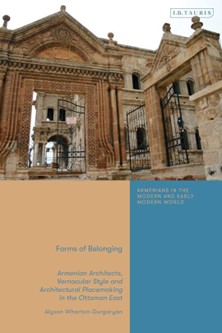
I.B. Tauris/Bloomsbury, 2025, 256 p. + 60 bw illus.
Contrary to the historical record, which views the architecture of the eastern Ottoman cities as unchanging remnants of a medieval and proto-Turkish golden age, this richly illustrated book highlights the wide-ranging transformations that Mardin, Diyarbakir, Urfa, Antep, Bitlis and Erzurum, saw at the hands of Armenian architects of the nineteenth and twentieth centuries. Case studies reflect the agency of Armenian architects in constructing these buildings- whether churches, mansions, government offices, schools, or commercial structures. Each chapter looks to one of these cities and the participation of Armenians in shaping these places, not just through architecture but through city institutions, patronage, and benevolence. It argues that Armenians used the urban environment, and a uniquely Armenian reinvention of vernacular architecture, which reflected their religious, educational, intellectual, and political networks, to partake in the revival of these cities in an era marked by reforms to the Ottoman polity, political culture, and local governance. This was a show of popular belonging, and pride in local traditions, but it was also, merged with symbols of Ottoman authority, a reflection of the formation of Ottoman local elites, which included these Armenians - thus representing complex localization and Ottomanization processes at work. This book shows that there was not ʽoneʽ Armenian culture or identity, but many competing visions across Ottoman cities.
THE MELIKDOMS OF ARTSAKH, 17TH–19TH CENTURIES
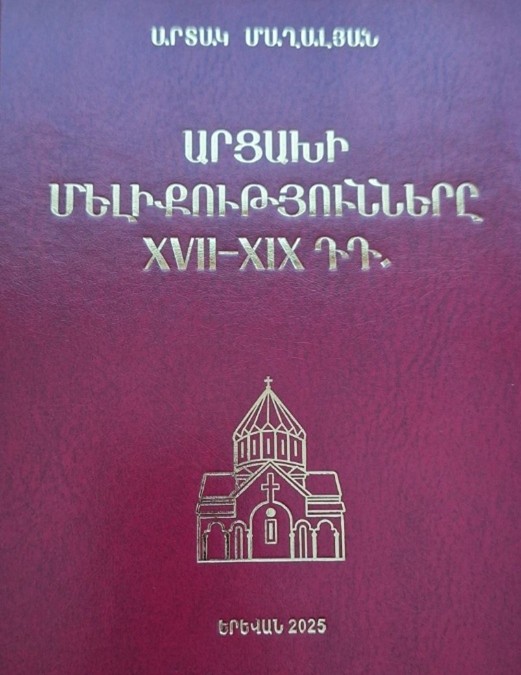
By: Artak Maghalyan PhD in History
Yerevan: Matenadaran Publishing House, 2025, 400 p. + 2 inserts
The monograph is devoted to one of the most important periods in Armenian history—the history of the melikdoms of Artsakh. Based on newly discovered archival materials, epigraphic evidence, and historiographical literature, the study examines issues related to the rights and duties of the meliks of Artsakh and presents the history of the melikdoms. The book demonstrates the continuity of Armenian authority in Artsakh up to the incorporation of the region into Russia. The volume is intended for historians, Orientalists, and a broad readership.
THE ARMENIAN WOMAN, MINORITARIAN AGENCY, AND THE MAKING OF IRANIAN MODERNITY, 1860–1979
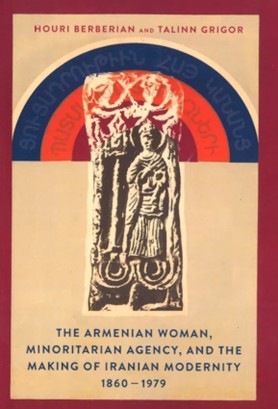
By: Houri Berberian
Talinn Grigor
Stanford University Press, 2025, 418 p.
With this book, Houri Berberian and Talinn Grigor offer the first history of Armenian women in modern Iran. Foregrounding the work of Armenian womenʽs organizations, the authors trace minoritarian politics and the shifting relationships among doubly minoritized Armenian female subjects, Iran’s central nodes of power, and the Irano-Armenian patriarchal institutions of church and political parties. Engaging broader considerations around modernization, nationalism, and feminism, this book makes a conceptually rich contribution to how we think about the history of women and minoritized peoples. Berberian and Grigor read archival, textual, visual, and oral history sources together and against one another to challenge conventional notions of “the archive” and transform silences and absences into audible and visual presences. Understanding minoritarian politics as formulated by women through their various forms of public and intellectual activisms, this book provides a groundbreaking intervention in Iran’s history of modernization, Armenian diasporic history, and Iranian and Armenian feminist historiography.
COMMEMORATING THE ARMENIAN GENOCIDE
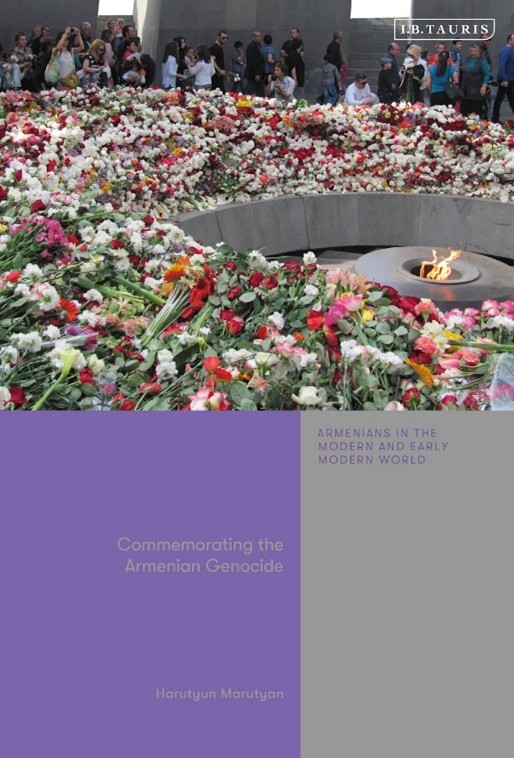
I.B. Tauris/Bloomsbury, 2025, 296 p.
Commemorated annually on 24 April, Armenian Genocide Remembrance Day is an important part of national identity in both Armenia and the diaspora. This book is a historical and anthropological account of how the genocide is commemorated by Armenians and its evolving significance over time. Beginning with the first demonstrations by survivors in Allied-occupied Constantinople in 1919, to the Stalinist ban on commemoration and the Khrushchev thaw and beyond, the book charts how the politics of the genocide and its official and popular memory fluctuated in Soviet Armenia and the diaspora. The book also provides a detailed account of the rituals involved in the annual march to the Armenian Genocide Memorial in Yerevan and other memory sites, analysing the ways that the collective memory of this foundational event is embodied and continues to reflect and shape Armenian identity today.
CONFLICT, SPACE AND TRANSNATIONALISM An Ethnography of the Second Nagorno-Karabakh War
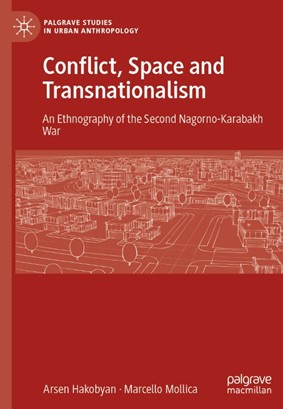
By: Arsen Hakobyan
Marcello Mollica
Palgrave Macmillan, 2025, 299 p.
This book looks at the way the 2020 Second Nagorno Karabakh War allowed urban spectacular transformation in war actors’ attitudes towards space and transnationalism. It concentrates on some specific events, including pre- and wartime life in the Nagorno Karabakh political capital Stepanakert and compelling historical and cultural heritage issues in the cultural capital Shushi and its meaning for the Armenian population worldwide. Attention is placed both on wartime social and urban changes and to the destruction, or attempted destruction, of Armenians cultural heritage during the conflict and in post-war Azerbaijani occupation. The first part of the book reconstructs the historic and religious context of Nagorno Karabakh, linking it with the regional geo-political dimension; meanwhile, the case studies analysed in the second part of the book will help understand spatial meanings (e.g., towns, cultural centres, monasteries) and the symbolic value of urban heritage while also discussing some conflict markers in the context of theories of transnationalism and diaspora studies.
METSAMOR: A Five-Thousand-Year-Old Settlement in Ancient Armenia
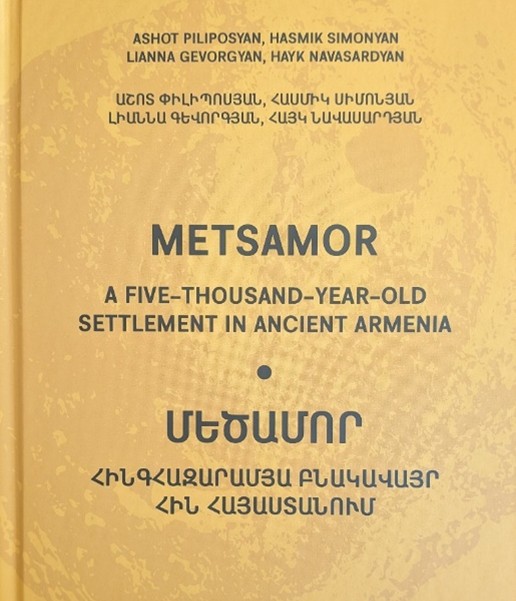
By: Ashot Piliposyan
Hasmik Simonyan
Lianna Gevorgyan
Hayk Navasardyan
Service for the Protection of Historical Environment and Cultural Museum-Reservations, SNCO, Yerevan, 2024, 180 p․
This book is dedicated to the results of 60 years of archaeological excavations at the ancient site of Metsamor, located in the Ararat Valley, in the centre of the Republic of Armenia. Research continues to this day in the citadel, the urban quarter and the necropolis of the monument. The large number of valuable finds that have been discovered prove that the ancient site was founded in the Chalcolithic period, on the border between the 5th and 4th millennium BC, and existed without significant interruption for more than six thousand years, until the Late Middle Ages. The presented archaeological materials and their parallels play an important role in revealing and interpreting the diverse historical and cultural processes of the early period of the Ancient Near East. The book is published within the framework of the grant provided by the Ministry of Education, Science, Culture and Sports of the Republic of Armenia.
COSMOGRAPHIC & GEOGRAPHIC HERITAGE IN THE MATENADARAN
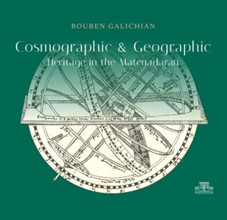
By: Galichian Rouben Honorary Doctor
Yerevan, Matenadaran 2025, 160 p.
The album has been prepared for the public at large, with special attention and basic information provided for scholars interested in the related subjects who would like to have some basic information about the wealth of medieval and old sources regarding geography, cartography as well as astronomy and astrology kept in the archives and manuscripts of the Matenadaran. For researchers this album could be an introductory source for the type and sort of information in the Matenadaran which is available to the public, which could be useful for further and wider studies and researches. To be filed under the following categories: Geography, cartography, maps, atlases, astronomy, astrology, history, religion and Armenian manuscripts.
SACRED LANDSCAPES OF SYUNIK DURING THE BRONZE AND IRON AGES
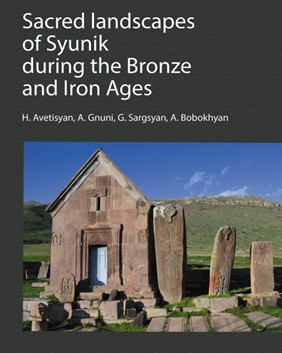
By: H. Avetisyan
A. Gnuni
G. Sargsyan
A. Bobokhyan
IAE Publication, Yerevan, 2025, 221 p.
Sacred places have played a significant role throughout human history. Often, social life was formed and developed around them. The present work examines the sacred places of historical Syunik within the broader context of the Armenian Highland, aiming to identify the specific features that have shaped the sacred history of this region. Accordingly, the authors discuss theoretical issues, address the natural-historical environment and the history of research, attempt to classify the sacred places of Syunik, and explore the peculiarities of their topography. The book is intended for archaeologists, ethnographers, cultural historians, art historians, as well as for a wider audience of readers.
ARMENIANS IN THE PERSIANATE WORLD
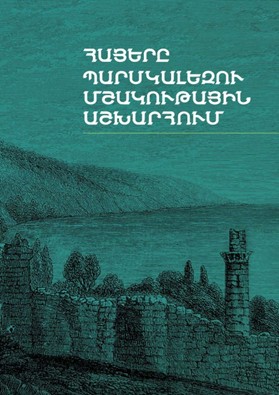
Edited by Hasmik Kirakosyan, Yerevan, Matenadaran, 2025, 168 p.
The collection examines the Persian lexical material found in late-medieval bilingual Persian–Armenian and Armenian–Persian manuscript dictionaries; the circumstances under which mixed (mulammaʿ) Armenian-Persian-Turkish poetry emerged in 16th–17th-century Armenian peotry within the multicultural Near Eastern milieu; the bridging role of 19th-century Constantinopolitan Armenians and the Iranian intellectuals based in Constantinople in fostering cultural rapprochement between East and West; the teaching of Persian in Armenian schools, the compilation of relevant textbooks, and the introduction of new instructional methods; the use of expressive means of classical Persian poetry in the folk song tradition of the Julfa Armenians who had resettled in India; the establishment of a press for Arabic-script literature in India; and the pedagogical commonalities observed in Armenian and Iranian folk tales. It is intended for philologists, orientalists, students of humanities faculties, and readers interested in the topic.