Դասակարգել հոդվածները ըստ:  Ամսաթիվ
  Վերնագիր
Հեղինակ
Վերնագիր
Հեղինակ
Պատմություն6
AN EPISODE FROM THE HISTORY OF THE 1299 SYRIAN CAMPAIGN OF THE MONGOL ILKHANATE AND THEIR ALLIES
By: Aram Hovhannisyan PhD in History, Associate Professor, Yerevan State University, aramhovhannisyan525@gmail.com
The history of Armenian-Mongol relations occupies a very important and unique place in the history of Cilician Armenia. Unfortunately, to this day, many events in the history of these relations have not been subjected to meticulous study, and numerous issues have not been properly evaluated. Our present research is dedicated to filling that gap.
It is well known that the Armenian Kingdom of Cilicia became a junior ally of the Mongols through the Armenian-Mongol treaty signed in Karakorum in 1254. Together with them, it participated in numerous campaigns against the Mamluk Sultanate of Egypt, which subsequently earned the Armenian kingdom the Sultanate’s enmity.
- Հանգուցային բառեր:
- Cilicia
- Mongol
- Syria
- allies
- troops
- campaign
- Ghazan Ilkhan
- King of Armenia
- Hetum II
 Ներբեռնել
pdf (0.80 MB)
THE ACTIVITIES OF THE HUNCHAKIANS IN TRANSCAUCASIA, 1918–1920
By: Gegham Hovhannisyan Senior researcher at the Institute of History, NAS RA PhD in Historical Sciences, Associate Professor, gegham.hovhannisian@mail.ru
During the final period of World War I, the visible victory of the Entente on one hand, and the collapse of Tsarism in Russia on the other, created objective prerequisites for the restoration of Armenian statehood. The national parties, having assumed the role of the Armenian people’s political leadership, attempted to orient themselves within the vortex of rapid geopolitical events. Each of them had its own unique vision for solving this problem.
The Hunchakian Party was in a similar situation. Although the Hunchakians’ vision of independent statehood differed from that of the ARF (Dashnaktsutyun), which played a dominant role in Armenian socio-political life, throughout the entire existence of the First Republic of Armenia, the Hunchakians considered it an inseparable part of United Armenia. After the fall of the Republic, the Hunchakians declared that they were setting aside ideological differences and were ready to cooperate with the Soviet authorities of Armenia.
Ներբեռնելpdf (0.80 MB)
THE HIERARCHY OF THE COUNTRIES OF THE ANCIENT NEAR EAST
By: Murad Ohanyan Independent Researcher, muradohanyan@gmail.com
According to numerous sources, from the 3rd millennium BC until the fall of the Sasanian Empire (7th century AD), there was a clear hierarchy between the countries and territorial units of the Ancient Near East, and later, mainly between the countries of Western Asia. The countries of the region and the territorial units included in them or their rulers were hierarchically classified by ranks and titles expressing the degree of power, or by direct numbering. Thus, the boundaries of the parties’ authority and jurisdiction have been determined. The hierarchy was established or confirmed during special ceremonies designated for this purpose and was considered a law set by the dominant king.
The discovery of the hierarchy allows us to form more specific ideas about the position and influence of the countries included in the Ancient Near East region to better understand the course of historical events and the logic of their development.
Ներբեռնելpdf (0.99 MB)
TESTIMONIALS OF THE 2ND CAUCASIAN RIFLE BRIGADE OFFICERS ABOUT THE ARMENIAN GENOCIDE
By: Ruben Sahakyan Doctor in History, Senior Researcher at the Institute of History, National Academy of Sciences of the Republic of Armenia, rubensahakyan58@gmail.com
Lilit Qosyan Institute of History NAS RA, Junior Researcher, L.Qosyan@gmail.com
Ninetta Adamyan Institute of History, NAS RA, Armenia,
E-mail: ninettadamyan@gmail.com;
https://orcid.org/0000-0001-5014-6209
In the article are presented the memoirs and reports of four officers of the 2nd Caucasian Rifle Brigade, later Division: General T. Nazarbekyan, Colonel (later General) V. N. Poltavtsev, M. A. Krim Shamkhalov-Sokolov, and zauryad praporshchik (Warrant Officer) Udovitsa on numerous cases of mass massacres of Armenians, the Genocide, which mainly took place in the province of Van and the city and district of Mush. The testimonies mostly cover the years 1915–1916. They contain somes unknown information about the brutal and inhuman actions carried out by the Ottoman authorities. T. Nazarbekyan’s memoirs were written based on materials preserved in his personal archive. V. N. Poltavtsev wrote his memoirs abroad, in Belgrade. The report of the interrogation of Staff Captain Krim Shamkhalov and the report of the zauryad praporshchik Udovitsa are preserved in T. Nazarbekyan’s personal archive.
- Հանգուցային բառեր:
- First World War Caucasian front
- Armenian genocide
- memoirs
- testimonies
Ներբեռնելpdf (0.69 MB)
CLIMATIC CRISIS IN THE EASTERN PROVINCES OF THE OTTOMAN EMPIRE DURING THE SECOND HALF OF THE NINETEENTH CENTURY (According to British Consular and Travel Accounts)
By: Sona Vardanyan Institute of Oriental Studies, NAS of the RA
The article presents the crisis situations—drought, crop failure, and the resulting years of famine—that developed in the eastern provinces of the Ottoman Empire during the second half of the 19th century, based on British consular reports and travel accounts. These climatic anomalies were part of the final phase of the Little Ice Age, which was characterized by climatic instability that created weather extremes, including fluctuations in temperature and precipitation.
- Հանգուցային բառեր:
- Ottoman Empire
- climate crisis
- drought
- crop failure
- famine
- British sources
Ներբեռնելpdf (0.78 MB)
THE REPUBLIC OF ARMENIA AT THE EPICENTER OF AN ETHNOPOLITICAL CONFLICT: MUSLIM UPRISINGS IN ARMENIA’S KARS MARZ IN 1918–1920 AND THE BRITISH POSITION
By: Vanik Virabyan Chair of Armenian History, Armenian State Pedagogical University after Kh. Abovyan, Doctor of Historical Sciences, Professor, Email: vanik.virabyan@mail.ru
Hrant Virabyan Kh. Abovyan Armenian State Pedagogical University, Yerevan, Republic of Armenia, E-mail: hrant-virabyan@bk.ru
Against the backdrop of the 1917 Russian revolutions and the collapse of the Caucasus Front, in a tense climate of mutual distrust—and within a foreign-policy environment that outwardly appeared favorable to Armenia—Muslim uprisings erupted. By the Treaty of Batum on June 4, 1918, the Kars marz (province), among other regions, was occupied by the Turks. Following its defeat, Turkey was forced to withdraw from Transcaucasia; on November 22, the Turks left Aleksandropol, and on December 4, Armenian troops entered the city. With the annexation of the Aleksandropol uezd (district) to the Republic of Armenia (RA), the issue of the Kars province was also raised. According to the Armistice of Mudros, the Armenian-Turkish border was to be restored along the projected 1914 Russian-Turkish border line.
The Turkish-Muslim movements of 1918–1920 in the Kars province and within the sovereign territories of the Republic of Armenia were anti-Armenian and anti-state in nature. The encroachments of the insurgent Muslim population were aimed at redrawing the sovereign borders of the RA proclaimed in May 1918, ultimately leading to the territorial dismemberment of the RA. This aimed to annex not only the regions of Sotk-Basargechar, Karabakh-Artsakh, Zangezur-Syunik, and Nakhichevan to Turkey, but also the Kars province, which held immense strategic importance for the RA.
From the very beginning, Azerbaijan presented territorial claims and ambitions to the Republic of Armenia. The military-political representations of Great Britain and other countries in Transcaucasia carried out an arbitral mission in this matter; however, this mission was fraught with double standards and preconditions. Ultimately, it was not aimed at ensuring the territorial integrity of the Republic of Armenia, thereby facilitating the activation of Muslim insurgent-separatist movements against the sovereign rights of the RA.
- Հանգուցային բառեր:
- Kars marz
- Republic of Armenia
- Muslim movements
- Great Britain
- Azerbaijan
- Turkey
Ներբեռնելpdf (1.09 MB)
Օրենք1
THE LEGAL FOUNDATIONS OF REGULATING FAMILY RELATIONS AND THE ORDER OF SUCCESSION IN SMBAT SPARAPET’S “DATASTANAGIRK” (BOOK OF JUDGMENTS)
By: Lilit Sarvazyan PhD, Associate Professor at the Yerevan State Pedagogical University Head of the Department of Theory and History of Philosophy, Institute of Philosophy, Sociology and Law, NAS RA lilit.sarvazyan@gmail.com
In all historical periods, a special order for regulating marriage and family relations has existed in Armenia. Family law is the totality of legal norms that regulate personal non-property and related property relations arising from marriage, kinship, and other grounds provided by law. The institutions of family law and the principles of property inheritance have been preserved—with certain changes and revisions—within Armenian legal-philosophical culture. In this context, we emphasize the study of national sources of law, including Smbat Sparapet’s “Datastanagirk” (Book of Judgments), which contains ideas of modern resonance. These include marriage based on love, mutual consent, and free choice; the legal equality of spouses; the exclusion of violence against women and children; the prevention of immoral relations; and the protection of ancestral property and hereditary rights.
- Հանգուցային բառեր:
- Datastanagirk
- family law
- free choice
- moral virtues
- legal policy
- order of succession
- property relations
Ներբեռնելpdf (0.75 MB)
Միջազգային հարաբերություններ1
THE NORMALIZATION PROCESS OF ARMENIAN-TURKISH RELATIONS AND ITS IMPACT ON HOMELAND-DIASPORA RELATIONS (Contemporary Period)
By: Ara Hovhannisyan PhD in Historical Sciences, Associate Professor, Chair of Armenian History, Yerevan State University,
Email: arahovhannisyan@ysu.am
ORCID: https://orcid.org/0009-0002-8421-5908
In the article are discussed the normalization processes of Armenian-Turkish relations in the contemporary period. It presents in detail the attempts made to normalize these relations within the specified period. An effort is made to understand the real motives behind initiating the normalization process of Armenian-Turkish relations. Special attention is given to the impact of this process on Homeland-Diaspora relations. The article reveals the prevailing approaches in the Diaspora and mainly negative attitude toward these processes. It also outlines the reasons for certain tensions in Homeland-Diaspora relations. In particular, through specific examples, the article shows how the adversaries of the Armenian people attempted to drive a wedge between the Homeland and the Diaspora.
Ներբեռնելpdf (0.76 MB)
Էկոնոմիկա1
MARKETING OF GASTRONOMIC TOURISM IN ARMENIA WITHIN THE FRAMEWORK OF ECONOMIC DEVELOPMENT
By: Harutyun Grigoryan PhD Student at the Department of Marketing, Faculty of Marketing and Business Organization, Armenian State University of Economics
E-mail: harutyun.grigoryan@pers.ufar.am
To clarify the development trends of gastronomic tourism in Armenia, digital marketing strategies and PR tools were examined. Through a quantitative analysis of the opportunities and threats facing Armenia’s gastronomic tourism sector, it was demonstrated that the country possesses significant potential, as reflected in the ratio between the overall scores of its strengths and weaknesses. The sector is supported by a competitive foundation, including rich culinary heritage, high-quality raw materials, and longstanding winemaking traditions. The high score assigned to opportunities further indicates the strong growth potential of gastronomic tourism, particularly due to increasing international interest, digital promotion, and rising demand for organic food products. The identified threats are comparatively less significant, suggesting that external risks are driven mainly by demographic and political factors that remain manageable.
- Հանգուցային բառեր:
- gastronomic tourism
- digital marketing
- territorial marketing
- tourist
- service
Ներբեռնելpdf (0.88 MB)
Արվեստ և ճարտարապետություն1
ALEXANDER KULEBYAKIN AND HOVHANNES TUMANYAN
By: Anushavan Zakaryan Doctor in Philology, Editor-in-Chief of the Historical and Philological Journal, anushavan.zakaryan@arts.sci.am, ORCID:0009-0008-4762-4124
The Russian Major General and Terek Cossack, Alexander Parfenyevich Kulebyakin was a striking personality who combined the talents of a military officer, a poet, and a public figure. His multifaceted activities hold significant historical and documentary value for completing the picture of Armenian reality at the beginning of the last century. This article discusses in detail his relations specifically with the great Armenian poet Hovhannes Tumanyan, demonstrating that they represent an interesting chapter in the history of Russian-Armenian cultural ties during the 1910s.
- Հանգուցային բառեր:
- Alexander Parfenyevich Kulebyakin
- Hovhannes Tumanyan
- Tiflis
- Guild of Poets
Ներբեռնելpdf (0.70 MB)
Ռազմական պատմություն1
THE IMPACT OF MILITARY SCHOOLS ON THE IRAQI ARMY AT THE EVE OF OF THE FIRST GULF WAR
By: Arkadi Grigoryan Deputy Head of the RA Command and Staff Institute named after V. Sargsyan of the Ministry of Defense, Colonel, applicant of the Institute of Oriental Studies of the RA NAS
E-Mail: arkadigrigoryan82@gmail.com
The article examines the origins, development, and consequences of the influence of Western and Soviet military schools on the formation of the Iraqi Armed Forces. Using a historical-comparative approach, the author analyzes the reasons behind the failure of the decision-making freedoms theoretically granted to commanders through British and French military traditions.
At the same time, the problems of the officer corps operating under the rigid vertical of Soviet rule in the Iran-Iraq War are analyzed, and it is documented that in the first Gulf War, that officer corps, having the fourth most massive army in the world, suffered a crushing defeat not only in the technological field, but first of all in the culture of military management.
Through the influence of military schools on the Iraqi army, the author highlights the negative consequences of the rigid Soviet-style vertical management during the army-building phase of the RA Armed Forces during the 4-day and 44-day military operations in Artsakh.
Ներբեռնելpdf (0.63 MB)
Գրախոսություններ1
Gagik Sargsyan, Artak Gnuni, Levon Mkrtchyan, The Fortresses օf Qashatagh Region օf the Artsakh Republic, Yerevan: Publication օf the Institute օf Archaeology and Ethnography, NAS RA, 2022
By: Ani Petrosyan Ani Petrosyan (Institute of Archaeology and Ethnography, NAS RA)
E-Mail: ani.petrosyan@iae.am
The monograph “The Fortresses of the Qashatagh Region of the Artsakh Republic” by G. Sargsyan, A. Gnuni, and L. Mkrtchyan represents a major scholarly contribution to the archaeology and historical geography of the Caucasus. Dedicated to the study of 37 fortresses in the Qashatagh region, the work synthesizes decades of fieldwork, archival research, and historiographical engagement. It is situated at the intersection of fortification studies, landscape archaeology, and Armenian historical studies, and aims to provide a systematic account of fortified sites within a strategically significant yet historically understudied region.
Ներբեռնելpdf (0.73 MB)
Նոր գրքեր11
THE MELIQDOMS OF ARTSAKH (KARABAKH) IN THE 17-19TH CENTURIES
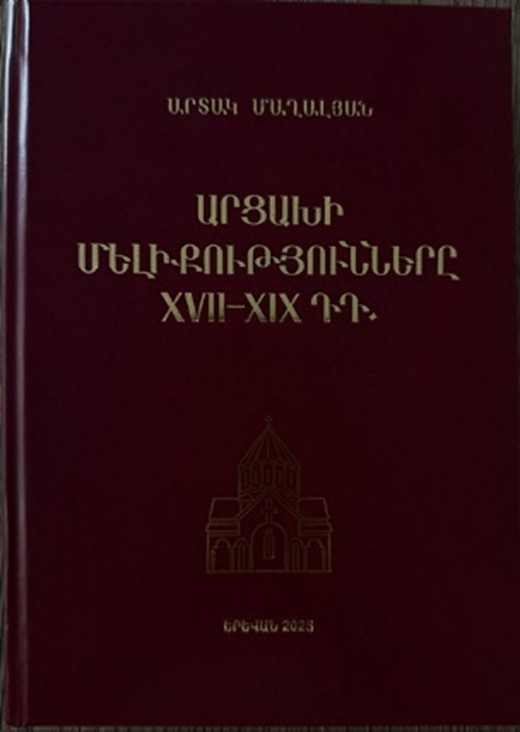
By: Artak Maghalyan PhD in History
Yerevan, VMV Print, 2025, 400p. (In Armenian)
This monograph is developed to the study of the Armenian meliqdoms (principalities) of Artsakh. The study covers the period starting from the 17th century through 1828, when the meliqdoms of Artsakh ceased to exist following the incorporation of Eastern Armenia into the Russian Empire. Despite of many works on the late medieval history of Artsakh written by Armenian authors in pre-Soviet and Soviet periods, the history of the meliqdoms of Artsakh is not sufficiently studied and many aspects of this history still await to be revealed. One of such aspects relates to the detailed realm of activities of the meliqs of Artsakh. Also, the genealogy of the meliq houses of Artsakh has not been studied thoroughly until now. These inter alia are some of the questions examined by this work.
The South Caucasus: Trends and Prospects in the Context of the War in Ukraine
Yerevan, Caucasus Institute, 2025, 224p., Ed. Alexander Iskandaryan
This volume is part of the Caucasus Institute’s regular series of publications. It contains articles by scholars from Armenia, Azerbaijan, Georgia, Turkey, Poland, and the United Kingdom. The authors explore political, economic, and security related developments in the South Caucasus in the context of the war in Ukraine. The articles are based on papers presented at an international conference held in Yerevan in 2024 in the framework of the project on Engaging Society and Government in Armenia in Developing an Agenda for a Secure Region funded by UK International Development from the UK government.
Shengavit: A Kura-Araxes Center in Armenia
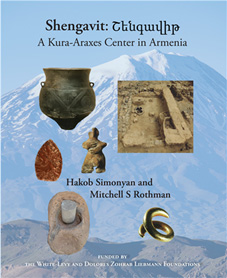
By: Hakob Simonyan
Mitchell S.Rothman
Costa Mesa, CA., Mazda, 2023, 298 + xii p. (In Armenian and English).
This book presents a comprehensive examination of Shengavit. The importance of the site of Shengavit, which is located in the neighborhood of the same name within the Armenian capital city of Yerevan, is its relation to the Kura-Araxes cultural tradition and societal form. The Kura-Araxes, which lasted from 3500 to 2500 BCE, is one of the cultural traditions in the very dynamic fourth and early third millennia BCE. In a landscape where most settlements were no larger than one hectare, Shengavit appears to have been a small center with some satellite settlements where intensive production of grains, organization to build a stone wall around the settlement that was still visible in the early 20th century CE developed. Excavation began there in the 1930s and continued until the 21st century CE. This volume is the first attempt to provide a complete analysis of the site’s remains in light of our broader understanding of cultural and societal evolution at this critical time in human pre- and early history. Accompanied by a web archive on the tDAR site, it can be seen as a critical resource for research on the Kura-Araxes and for those interested in the topic.
Smart Nation: A Blueprint for Modern Armenia
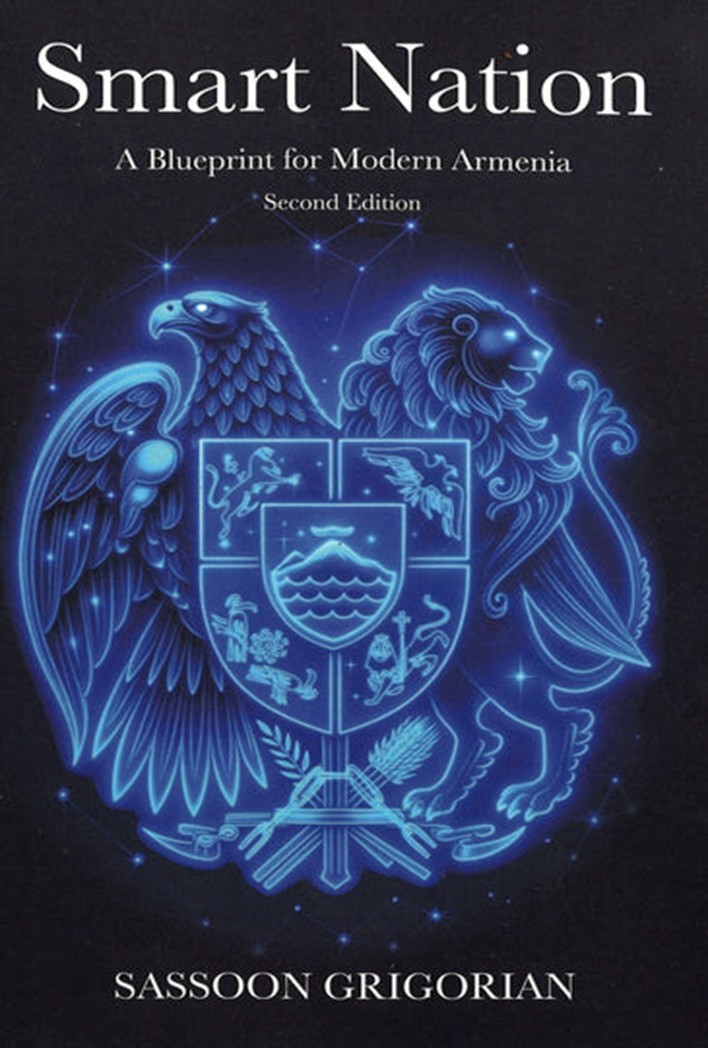
Gomidas Institute Books, 2016, 160p., Second Edition
This monograph explores Armenia’s future at a critical crossroads. Building on the groundbreaking first edition—where over 70 percent of its recommen¬dations were adopted in full or in part—this new edition goes further, tackling the urgent questions of technology, diplomacy, security, and prosperity in an era of uncertainty with new insights, bold strategies, and visionary ideas that could help shape Armenia’s tomorrow.
BEYOND THE DARKNESS: CRIMES FROM ANOTHER ERA
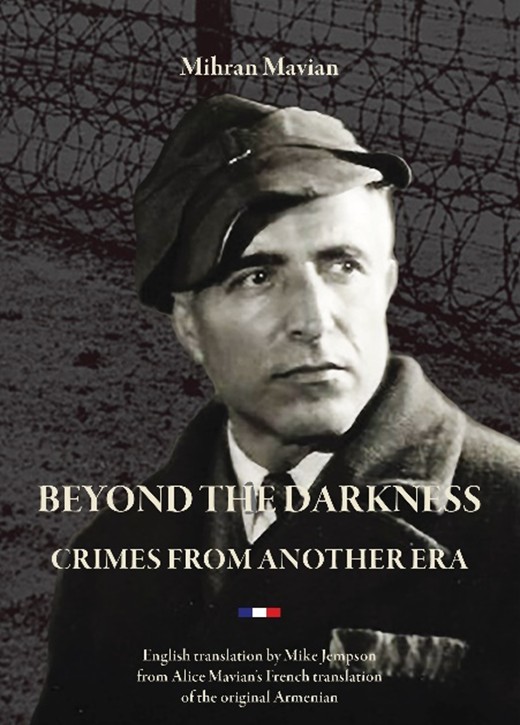
By: Mihran Mavian
Gomidas Institute Books, 2026, 188p., (with English translation, by Mike Jempson)
A survivor of the Armenian Genocide and the Nazi concentration camps, Mihran Mavian bears witness to some of the darkest chapters of the twentieth century. A French-Armenian communist and resistance fighter, he worked as a liaison agent for the Workers International Movement against Nazi occupation in Paris before his arrest by the Gestapo in 1944. Tortured and starved, as he was transported from Fresnes prison to Compiègne-Royallieu, Auschwitz, Buchenwald, and Flossenbürg extermination camps, Mavian survived against all odds.
Armenian Texts and Studies
Series Editors: Valentina Calzolari and Theo Maarten van Lint, BRILL, 2017, 230p.
This series combines persisting needs with emerging emphases in Armenian studies. It encourages studies that place Armenian culture in its multifaceted international context, on the Armenian plateau as well as in its historic and current Diaspora. Philological studies containing important critically edited texts, translations and commentaries remain in need as before. Thousands of Armenian manuscripts await disclosure in order to become part of scholarly and popular discourse and take their place in a field that invites an interdisciplinary and pluralistic approach like few others. Armenian literature from the seventeenth century up to the present is understudied and will amply repay scholarly engagement. Armenian Texts and Studies deals with Armenian prehistory up to the modern and contemporary period and promotes research that applies methods current in sociology, anthropology and other social sciences next to those used in literary, linguistic and historical studies, including the study of Armenian cinema and modern media.
Uruguay 1965: The First Recognition of the Armenian Genocide
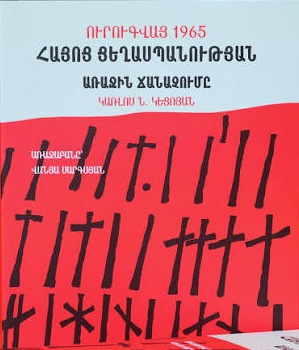
By: Carlos Ketzoian
Yerevan, Edit Print, 2026, 296p. (In Armenian)
This book was published in Spanish in April 2025, and the Armenian translation was published in March 2026, on the occasion of the 60th anniversary of the recognition of the Armenian Genocide by the government of the Oriental Republic of Uruguay. This book is a study of the fact that Uruguay was the first in the world to recognize the Armenian Genocide in April 1965, with Law No. 13.326. Uruguay adopted a law that stands by human rights and acknowledges the importance of this event. The book was published with the recommendation of the scientific committee of the Faculty of Humanities and Educational Sciences of the University of the Republic of Uruguay and the Faculty of History of Yerevan State University.
Catholicos of All Armenians Ghukas Karnetsi Spiritual, economic, cultural and political activities
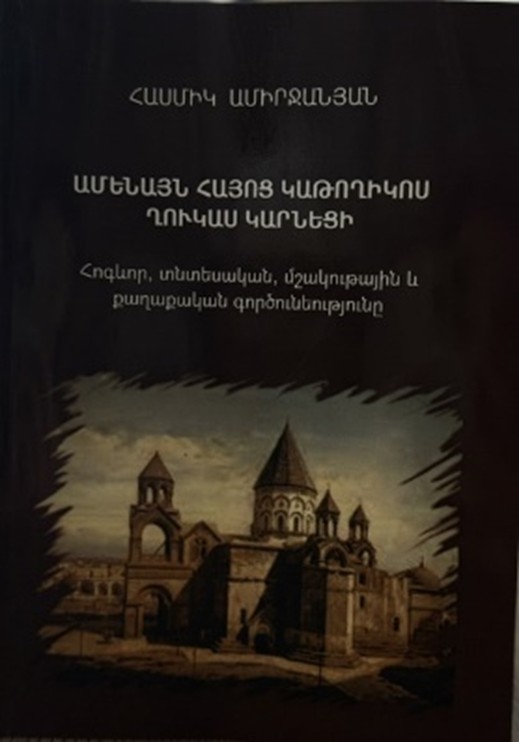
Yerevan, INFOCOPY, 2026, 300p., (In Armenian).
The work is dedicated to the activities of the 18th-century spiritual figure, Catholicos of All Armenians Ghukas Karnetsi. Based on archival materials and historical literature, the most important events of the life and activities of Ghukas Karnetsi and his role in Armenian cultural life, national liberation movements, and other spheres are highlighted. From the first days of his election as Catholicos, he managed to establish close economic relations with Armenian dioceses in Iran, Russia, etc. Karnetsi’s role in the development of Armenian culture is significant. The book is intended for historians, cultural and spiritual officials, and the general public.
Archbishop Hovsep Arghutyan, Rostov-on Don
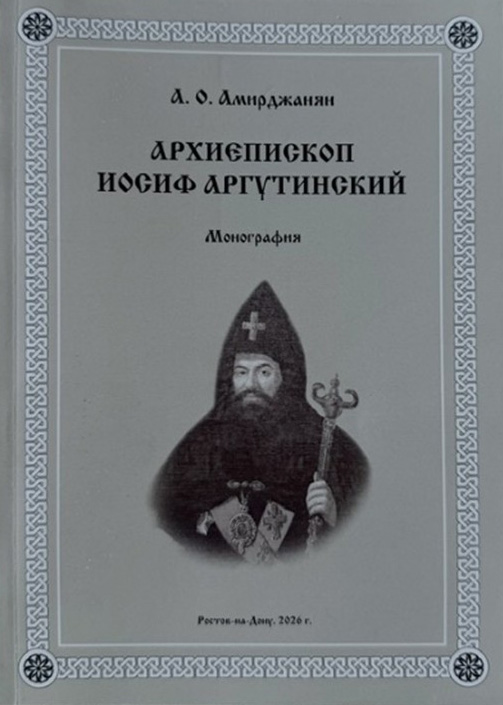
Southern Federal University publishing house, 2026, 430 p. (In Russian).
This book presents the activities of Archbishop Hovsep Arghutyan (Hovsep Arghutinski) a prominent religious figure and the leader of Armenian Eparchy in Russia. The Archbishop played a significant role in resettling Armenians within the borders of the Russian empire and in founding New Nakhijevan and Grigoriopol in the last quarter of the 18th century. Hovsep Arghutyan raised the question of the national liberation struggle for Armenia from foreign yoke during Russian-Turkish wars. His activities promoted and development of the socio-economic life in New Nakhijevan and the other regions inhabited by Armenians. This work reveals the history of Armenian Apostolic church of Russia through the re-evaluation of the historical role of the Armenian Eparchy in Russia.
Petroglyphs of Armenia
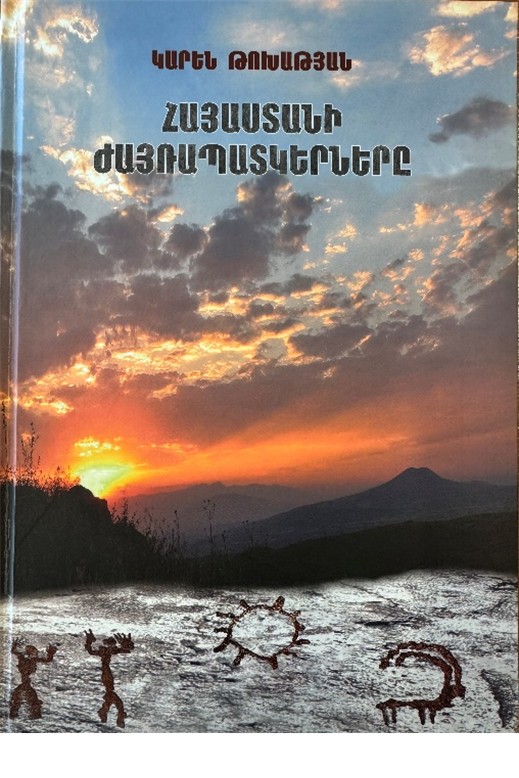
By: Tokhatyan K.S. Researcher
Institute of History of NAS RA
Yerevan: Gitutyun publishing house, 2025, 520 p., 248 Tables, 7 maps (In Armenian).
In this monumental volume are collected and thoroughly studied all known petroglyphs from the territory of the Republic of Armenia and those from the historical Armenia. The study of this material is based on the principles of dating and systemizing the data by means of comparative analyses. The book could be useful for the specialists in the fields of archaeology, ethnography, history, calendar, writing systems and related disciplines.
Dress in Urartu
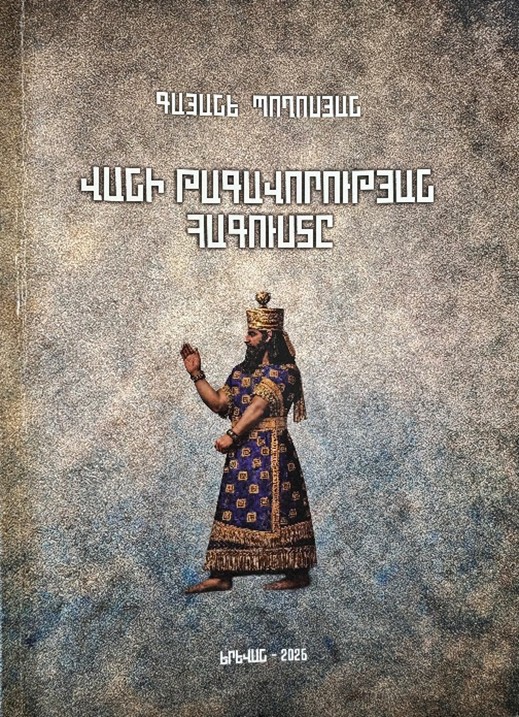
By: Gayane Poghosyan
Yerevan: Gitutyun publishing house, 2026, 160 p., 24 photos (In Armenian).
In the monograph written by the art historian G.Poghosyan is studied typological and aesthetic peculiarities of the dress that is preserved on different Urartian archaeological artefacts. The author presents all known types of dresses of deities and representatives of various social groups, male and female dresses as well.